Inclusion and Exclusion in Our Daily Lives
PART V: FAMILY & HISTORY
JODI L. HOTTEL
SWEEPING
Our battered suitcases stand by the door ready to go, but they will have to wait while I try to sweep away the desert dust, one last time.
Three years we've been forced to live behind barbed wire. Now, Papa and I are being forced out— too old for farming, no home to go back to, our children already gone— Sam to war in Europe, a college in Chicago for Mei.
I pause in the doorway of the barrack, our only shelter from the bitter winds, dust-driven heat. No need for a last look at the sentinel of Heart Mountain. It will never be far enough away that I don’t see it.
I return to my sweeping, shoving the broom hard into empty corners, shaping neat piles of sand. Papa chides— Why clean? No one will live here again. But I don’t listen.
Whoever comes to demolish these empty walls will see— we Japanese kept our homes clean, did our best to get rid of the shame, the stigma we wear on our faces.
DISCUSSION QUESTIONS
What happens in us when we go back and actively try to imagine the social injustices our ancestors experienced?
Does this imaginative identification ease or intensify the experience of exclusion or inclusion for us now? How?
AUTHOR'S COMMENTARY
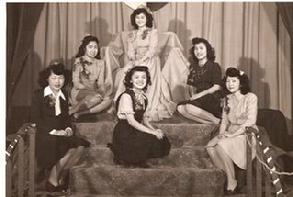
My mother has always had a movie star’s smile. Even now, although she’s 82, people comment on her radiant smile. When I was young and pressed her, she would tell me tidbits about her childhood. She would giggle with embarrassment as she related that people used to tell her that she looked just like Shirley Temple, her favorite movie star.
At age sixteen, she and her family were removed from their farm in the Yakima Valley of Washington and interned at a concentration camp in Wyoming during WWII because they were Japanese. She was reticent to discuss this part of her life, as were most Japanese Americans of her generation because it brought back too many painful memories. But I was always yearned to know more. I came to understand that she felt shame for being Japanese, although she had done no wrong.
My motivation for writing this and other poems about the Japanese American experience is to understand my mother but also to tell the story of a passing generation of men and women, to serve as a reminder so that loss of liberty due solely to race will not happen again.
JODI L. HOTTEL
is a writer and retired English teacher, living in Santa Rosa, CA. Her
work has been published in the English Journal, The Dickens and
anthologies from the University of Iowa Press, Tebot Bach, and the
Healdsburg Arts Council. At age 16, her mother was interned at Heart
Mountain, Wyoming.